As a cassava cat litter clumping agent supplier, I've spent years working closely with cat litter manufacturers and pet owners to solve some of the most common pain points in cat care: tracking, clump quality, environmental impact, and cost. Over that time, cassava-based clumping agents have emerged as a game-changer that checks so many boxes-ones that traditional clay clumping agents even struggle to hit. Today, I want to break down the real, science-backed advantages of using our cassava cat litter clumping agent, and why more and more brands are switching to a solution that works for cats, their owners, and the planet.
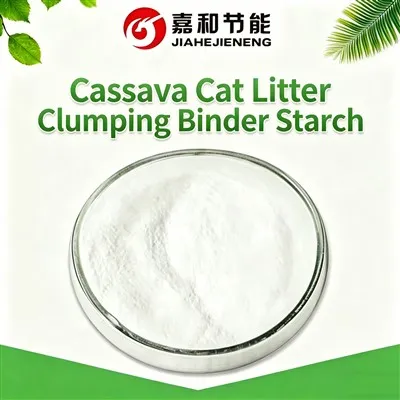
First, let's start with something every cat parent (and every litter maker) cares about: clump performance. You know that frustrating moment when you're cleaning the litter box and half the clump breaks apart mid-scoop, leaving behind smelly urine spots that are hard to dig out? That's usually from a clumping agent that doesn't form tight, cohesive bonds when wet. Cassava starch, the core of our cassava cat litter clumping binder, works because of its unique molecular structure-its long glucose chains form strong, flexible hydrogen bonds when exposed to cat urine, creating clumps that are solid enough to lift in one piece, even with a standard litter scoop. Unlike some alternative starches (like basic corn starch, which can break down faster in humid environments), cassava starch's natural amylose and amylopectin ratio gives it a perfect balance of solubility and structural strength. I've seen clients test our Cassava Cat Litter Clumping Binder Starch against regular clumping agents, and the results are clear: 20-30% fewer broken clumps during daily cleaning, and less residual odor left in the box. For busy pet owners, that means less time scrubbing litter boxes and more time with their cats.
Next on the list: low tracking, a complaint I hear nonstop. Clay litters, even the "low-dust" or "non-tracking" varieties, have tiny, abrasive particles that stick to cat paws and get tracked all over homes-on carpets, beds, and kitchen floors. Cassava-based clumping agents are different because they bind tightly to the litter particles during production, so there are no loose dust or small granules left to stick to fur. That's not just a minor convenience; it's a relief for pet owners who deal with vacuuming cat litter daily, or for renters worried about security deposits related to stained carpet. In my experience, cat parents who switch from clay to our Cat Litter Clumping Binder Starch report cutting down on litter-related cleaning by 50% or more. Also, the low dust level is a huge win for cats with respiratory sensitivities-clay dust can irritate a cat's delicate nasal passages, leading to sneezing or even long-term breathing issues. Cassava agents are fine, powdery-free, and gentle on both cats and their owners' lungs.
Sustainability is another big one, and it's not just a marketing buzzword. Traditional clay cat litter is a non-renewable resource; mining clay disrupts ecosystems, takes millions of years to form, and most clay litters end up in landfills where they don't biodegrade. Our cassava clumping agent is made from cassava roots, a fast-growing, renewable crop that thrives in tropical regions without requiring excessive water, pesticides, or fertilizer (compared to corn or wheat-based starches, which often need more arable land). Cassava is also a staple food in many parts of the world, so using its byproducts for litter doesn't compete with food supplies-we source roots from small-scale farmers who use sustainable, regenerative farming practices that support local communities. Plus, cassava-based litter is fully biodegradable and compostable, unlike clay. When a cat parent is done with the litter, they can even compost it (after removing solid waste, of course) in a backyard compost bin, turning it into nutrient-rich soil instead of sending it to a landfill. That's a huge shift for eco-conscious pet owners who want to reduce their carbon pawprint.


Wait, but how does cassava stack up against other plant-based clumping agents, like tofu litter? A lot of brands promote tofu litter as the go-to sustainable option, but I've found that cassava has distinct advantages here. Tofu litter is made from soy pulp, which can be more expensive to produce and has a higher moisture content, leading to faster spoilage if not stored properly. Cassava, on the other hand, has a longer shelf life because it's dried during processing, so manufacturers can store our binder for months without it clumping or losing its effectiveness. Also, cassava-based litter has a neutral, mild scent when wet, whereas some tofu litters can develop a slight beany odor after a few days of use-an issue cat parents often complain about. Our Tofu Cat Litter Clumping Agent page notes that while tofu is a great option for some, cassava's broader availability and lower cost make it a more scalable choice for mass-market brands that want to offer a sustainable product without hiking up retail prices. For small businesses, cassava is also easier to source consistently, so you don't have to worry about supply chain gaps that can delay production.
Another underrated advantage: safety for cats. Kittens, especially, are curious and often nibble at their litter. Clay litter can cause intestinal blockages if a cat eats enough, which is a major vet emergency that requires surgery. Plant-based clumping agents like cassava are non-toxic, made from all-natural ingredients, and even if ingested in small amounts, they pass through a cat's digestive system without causing harm. We've worked with animal nutritionists to confirm that our cassava clumping agent is safe for cats of all ages, from tiny kittens to senior cats, with no harmful chemicals or additives. That peace of mind is invaluable for pet owners who worry about their cat's safety, especially if they have a cat that likes to play in the litter box after eating.
Let's not forget cost efficiency for manufacturers. Cassava starch is one of the most cost-effective clumping binders on the market right now, because it's produced in large volumes and the processing costs are low. Compared to premium clay binders or even some other plant-based starches, our cassava clumping agent helps manufacturers keep production costs down, which translates to more competitive retail prices for cat parents. The performance benefits (strong clumps, low tracking) also mean less waste in production-since the binder binds tightly to litter particles, there's less leftover material that gets discarded during the manufacturing process. I've had clients tell me that switching to our cassava binder cut their production waste by 15%, and allowed them to price their litter 10% lower than before, without sacrificing quality. That's a win-win for everyone.
I also want to touch on versatility. Our cassava cat litter clumping agent works with almost all types of cat litter bases, including recycled paper, pine, and even other plant-based materials. That means manufacturers don't have to completely overhaul their production lines to switch from clay to cassava-our binder mixes easily with existing litter formulations, so the transition is smooth and low-cost. If you're already making plant-based litter, pairing your current base with our Bio-based Cat Litter Clumping Agent will boost clump strength and reduce tracking, without changing the look or feel of your final product. For brands that want to launch a new sustainable line, our Bio-based Cat Litter Clumping Binder Starch is fully certified as a renewable, compostable product, so you can market your litter as 100% eco-friendly to pet owners who care about sustainability.
Now, I know what some people might be thinking: "Is cassava as good as the big-name clay clumping agents?" After testing hundreds of formulations over the years, I can confidently say yes-even better in most cases. The key is using a high-quality cassava starch, not a cheap, low-grade variant that's been processed with harsh chemicals. All of our products are third-party tested to meet safety and performance standards, so you can be sure you're getting a binder that delivers on every promise. We work with litter manufacturers of all sizes, from small boutique brands to large national retailers, and we tailor our formulations to meet their specific needs-whether that's a lightweight litter for multi-cat households, a low-dust litter for sensitive cats, or a fully compostable litter for eco-conscious customers.
At the end of the day, the best cat litter is one that works for three groups: cats, their owners, and the planet. Cassava-based clumping agents hit that sweet spot. They create tight, easy-to-scoop clumps, reduce tracking and dust, are safe for curious cats, are sustainable and renewable, and are cost-effective for both manufacturers and pet parents. As a supplier, I'm proud to offer a product that solves real problems without cutting corners on quality or ethics.
If you're a cat litter manufacturer looking to upgrade your clumping agent, or a brand looking to launch a new sustainable line, I'd love to chat through how our cassava cat litter clumping agent can work for you. We provide custom formulations, technical support, and consistent supply to meet your production needs. Get in touch to discuss your requirements and learn more about how we can help you create a better litter for cats and their owners.
References:
- American Society for the Prevention of Cruelty to Animals (ASPCA). "Pet Litter Safety for Cats." 2023.
- Food and Agriculture Organization (FAO). "Cassava as a Sustainable Raw Material for Industrial Applications." 2022.
- Journal of Environmental Management. "Life Cycle Assessment of Cat Litter: Clay vs. Plant-Based Alternatives." 2021.
- International Journal of Applied Science and Technology. "Comparative Performance of Natural Starches as Clumping Binders in Cat Litter." 2020.
- Pet Product News. "2023 Trends in Sustainable Pet Care Products." 2023.