
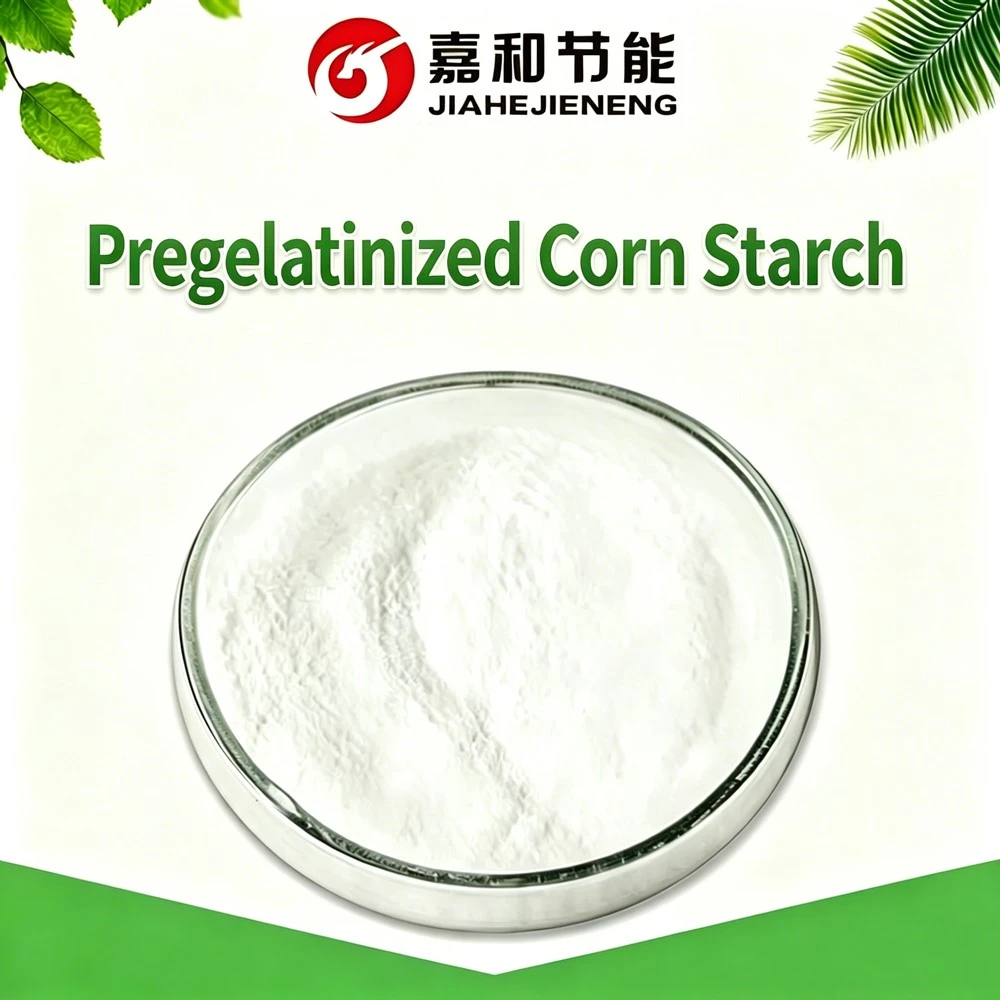
Pregelatinized Corn Starch has good water absorption and can develop viscosity relatively quickly. Therefore, improper addition methods may result in localized over-hydration, agglomeration, or uneven mixing. When Pregelatinized Corn Starch comes into contact with water, it can hydrate rapidly and increase the viscosity of the surrounding liquid. Although this property is beneficial for rapid thickening, it also means that the addition and mixing process should be carefully controlled.
First, avoid adding a large amount of Pregelatinized Corn Starch directly to the liquid at one time. When a high concentration of powder enters one location, the outer layer of the starch can rapidly absorb water and form a viscous layer. The powder inside the agglomerate may then have difficulty contacting sufficient water, causing larger lumps to form. Once agglomerates have developed, they may require considerably more mixing time to break down and disperse. A better approach is to control the addition rate and gradually introduce the starch into the liquid while maintaining continuous and uniform mixing.
Second, the addition sequence should be considered carefully. If the formulation contains several dry powder ingredients, Pregelatinized Corn Starch can be thoroughly premixed with the other powders before the dry blend is introduced into the liquid. This can help distribute the starch more evenly and reduce localized areas with excessive starch concentration. For formulations containing multiple powder ingredients, dry premixing can therefore be a useful approach for improving dispersion.
If Pregelatinized Corn Starch is added directly to a liquid, attention should also be paid to the location of the addition point. The powder should preferably be introduced into an area with sufficient liquid movement rather than into a stagnant or poorly mixed zone. This allows the newly added powder to be rapidly incorporated into the liquid and distributed throughout the system. In actual production, the appropriate addition point should be determined according to the mixing equipment, vessel geometry, liquid viscosity, and overall formulation.
Mixing time and mixing intensity can also affect dispersion. Insufficient mixing may leave undispersed powder in the system. However, simply extending the mixing time is not always the most effective solution, particularly after the system has already become highly viscous. Preventing agglomeration during the initial addition stage is generally more effective than trying to break down large lumps later.
The condition of the Pregelatinized Corn Starch before use is also important. If the product has absorbed moisture during storage and developed significant caking, it may be more difficult to disperse during processing. Because Pregelatinized Corn Starch can absorb moisture readily, opened packages should be properly sealed and stored in a dry environment to help maintain good powder flow and dispersion characteristics.
For different formulations, the starch can also be added in several portions rather than all at once. A small amount can be added first and allowed to disperse thoroughly before the next portion is introduced. This can reduce the risk of excessive localized hydration and agglomeration. For products requiring a high degree of uniformity, small-scale trials can be conducted to determine an appropriate addition rate, mixing method, and premixing ratio before applying the process to full-scale production.
In summary, the key to preventing uneven mixing of Pregelatinized Corn Starch is to ensure that the powder comes into contact with the liquid gradually, uniformly, and sufficiently. During actual use, particular attention should be paid to the addition rate, addition sequence, premixing method, mixing conditions, and storage condition of the raw material. Proper handling can reduce agglomeration and help Pregelatinized Corn Starch perform its intended functions, such as thickening, binding, and texture modification.