
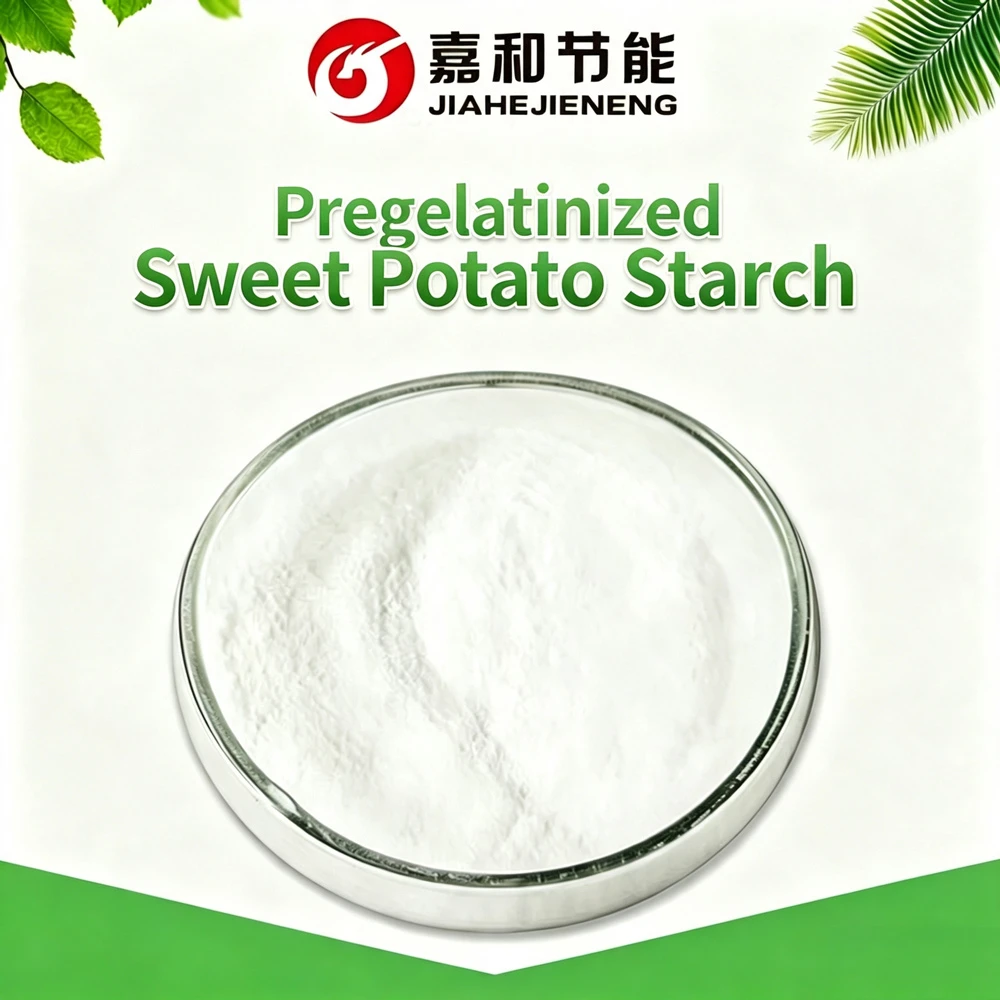
Caking is a top concern for many customers when testing and mass‑processing with Pregelatinized Sweet Potato Starch. Users worry that lumps will compromise product uniformity, create raw‑material waste and incur rework costs. It should be clarified that high‑quality Pregelatinized Sweet Potato Starch is not inherently prone to caking. Manufactured using sophisticated gelatinization, grinding and screening processes, it yields loose, fine powder with good flow properties. No agglomeration, lumps or nodules will form under standard working conditions. This represents one of its core advantages over native raw starch.
Caking encountered in practical application is rarely attributable to product quality itself. It mainly stems from inappropriate storage conditions and operational practices. In terms of storage, Pregelatinized Sweet Potato Starch is relatively hygroscopic. If stored in humid or poorly‑ventilated warehouses where ground moisture rises, powder surfaces absorb ambient moisture and form minor agglomerates. Prolonged moisture exposure creates hard lumps that resist dissolution. Unsealed packages after opening also rapidly absorb atmospheric moisture and cake, which is the most frequent cause.
Pseudo‑caking resulting from improper on‑site operation is another common pitfall. Many operators dump starch into water all at once or pour it directly into hot liquid. Instant surface gelatinization forms a film that encloses inner dry powder and produces hard outer‑wet‑inner‑dry nodules, namely caking. This phenomenon arises from incorrect feeding methods rather than product defects. In addition, insufficient pre‑dilution via dry blending, feeding without prior premixing, or improperly fast or slow stirring may also trigger partial caking and uneven dispersion.
Caking risks can be fully eliminated through proper storage and operation management. For storage, keep goods indoors in dry, cool and well‑ventilated warehouses away from water sources, heat sources and damp walls. Place stock on pallets to isolate it from ground moisture. Reseal packages tightly after partial use to block moisture and humid air. Minimize package opening on rainy days. For operation, the optimal practice is to pre‑blend Pregelatinized Sweet Potato Starch thoroughly with other dry powders before adding the mixture into liquid phases under continuous low‑speed agitation for gradual dispersion and dissolution. Avoid bulk one‑shot feeding and direct pouring onto high‑temperature liquid. Maintain consistent gentle agitation throughout processing.
Compared with pregelatinized corn starch and pregelatinized tapioca starch, Pregelatinized Sweet Potato Starch delivers superior powder flowability. With standardized handling and proper storage, lump‑free application with uniform, smooth dissolution can be achieved without sedimentation or delamination. It guarantees flatness and stability of finished goods for industrial, food, building‑material and other production scenarios, and effectively cuts raw‑material loss and rework expenses.