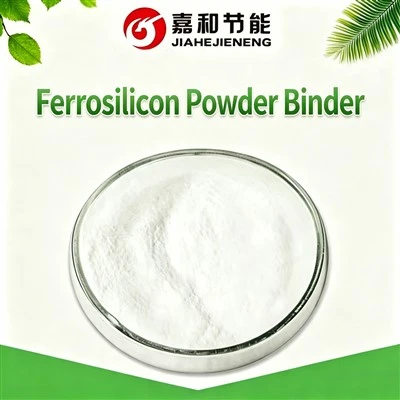


Ferrosilicon Powder Binder is a special bonding material formulated for ferrosilicon powder substrates. Standardized operation throughout the construction process directly determines the bonding strength, stability and service life of finished products. Strict operational requirements must be followed from pre‑construction preparation, batching and stirring, on‑site construction through to post‑curing maintenance. First is substrate surface treatment, the foundation of reliable bonding performance. Before construction, thoroughly remove dust, oil stains, rust, standing water and loose impurities from the substrate surface. If the base surface has bulges, cracks, pits or other defects, repair and polish these areas in advance to achieve a dry, solid, clean substrate free of loose material. Damp or contaminated base surfaces will prevent proper bonding between binder and substrate, easily causing debonding and delamination, and greatly reducing the durability of finished products.
Next is batching and stirring control, where precise proportioning is critical. Strictly follow the ratio specified by the product documentation for ferrosilicon powder and Ferrosilicon Powder Binder. Arbitrarily increasing or decreasing raw material proportions is prohibited. Insufficient binder results in inadequate bonding strength and loose finished parts, while excessive binder causes brittleness, shrinkage and cracking after curing. Adopt a step‑by‑step stirring procedure for batching: pour in the liquid binder first, then slowly add ferrosilicon powder. Stir with an electric mixer for 3‑5 minutes until the mixture is fine and uniform, free of particles, caking or delamination. Violent high‑speed stirring is prohibited, as it generates large quantities of bubbles. Trapped bubbles form pores after curing and reduce compaction and bonding strength. Prepare only the quantity of material required for immediate use according to construction speed. Avoid over‑batching at one time, which may lead to premature initial‑setting failure and material waste.
During construction, manage application rhythm and coating thickness. When applying, spreading or pouring the material, ensure even coverage of bonding surfaces with consistent coating thickness. Uneven thickness leads to inconsistent curing rates and causes deformation and cracking of finished products. Complete all operations continuously within the initial‑setting window of Ferrosilicon Powder Binder. Interruptions during application easily create joint gaps and compromise overall bonding performance. For multi‑layer construction, apply subsequent layers only after the preceding layer has fully cured to prevent interlayer delamination. Keep the construction site tidy. Prevent sand and debris from adhering to uncured adhesive layers, which would create surface defects and bonding failures.
Curing and maintenance are key final procedures for guaranteeing product quality. Implement protective measures immediately after construction. Vibration, impact, foot traffic and heavy loading are strictly forbidden, because external force will directly damage uncured bonding structures and cause bonding failure. Manage temperature and humidity within the curing environment. Avoid high‑temperature exposure, low‑temperature frost and damp standing‑water conditions. Natural curing under well‑ventilated ambient‑temperature conditions yields the best results. Do not forcibly pull or strike finished products after initial curing. Carry out subsequent processing, handling and service deployment only after full curing and achievement of rated strength. In addition, construction personnel shall observe safety‑protection protocols. Keep work sites well‑ventilated and wear dust‑resistant masks and gloves to avoid prolonged exposure to dust and binder. Keep away from open flames. Store raw materials in sealed containers away from light to prevent material degradation.